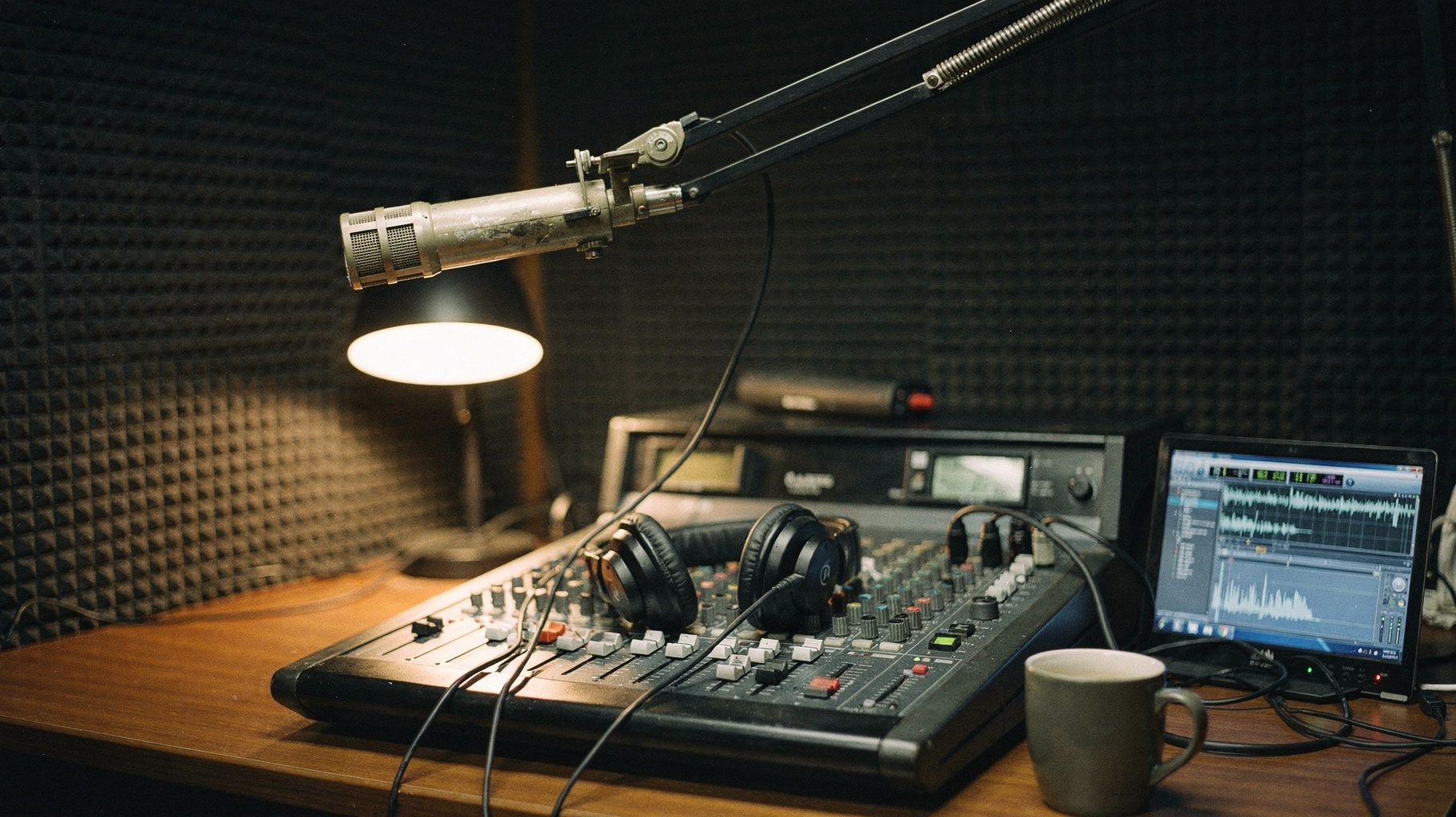
On September 10, OpenAI put GPT-Live-1 in the API: a voice model that runs full-duplex — it can hear a speaker mid-sentence and decide when to interject, the way people actually talk instead of the way walkie-talkies work. The voice layer bills at $0.05 per minute, per second, with model and tool usage charged separately. Two integration paths shipped with it: Responses delegation, where OpenAI’s own models handle the reasoning behind the voice, and client delegation, where a developer plugs in their own backend. Voice agents stopped being a specialty product this week.
Full-duplex is the part that matters. Previous voice stacks were half-duplex under the hood: the model listens until a silence detector decides the human stopped, then responds, and the human learns to stop talking first. Live models break that contract — they keep listening while speaking, which means they can be interrupted, can barge in, can hold the turn-taking logic that makes a phone call feel like a phone call. The failure mode of half-duplex is not latency; it is social. Full-duplex is what makes a voice agent usable by someone who has never thought about voice agents.
The delegation split is the second quiet shift. Responses delegation keeps the whole loop inside OpenAI’s stack — voice, reasoning, tools — and bills it as one session. Client delegation exposes the voice layer as a socket and lets whoever owns the customer relationship own the brain behind it. That is the shape of an infrastructure business: OpenAI wants to be the ears and mouth, and is now openly agnostic about whose cortex does the thinking. Compare the cloud vendors — the toll-road logic that already runs the industry, now applied to conversation itself.
The Latency Divide
At $0.05 a minute, an hour of daily conversation costs about $90 a month per user — real money at consumer scale, rounding error for enterprise support desks. The pricing tells you who this is for: products where voice is the interface, not a feature. The demos of 2024 promised conversations with machines; the shipping product of 2026 is more modest and more consequential — a reliable socket, billed by the second, that any backend can speak through. The demos were the advertisement. This is the plumbing.
The Takeaways
- GPT-Live-1 brings full-duplex voice to the API — interruptible, barge-in native, $0.05/min per-second billing.
- Two integration paths: Responses delegation (OpenAI reasoning) or client delegation (your backend owns the brain).
- Voice agents graduate from demo to infrastructure — a billed socket, agnostic about whose model does the thinking.