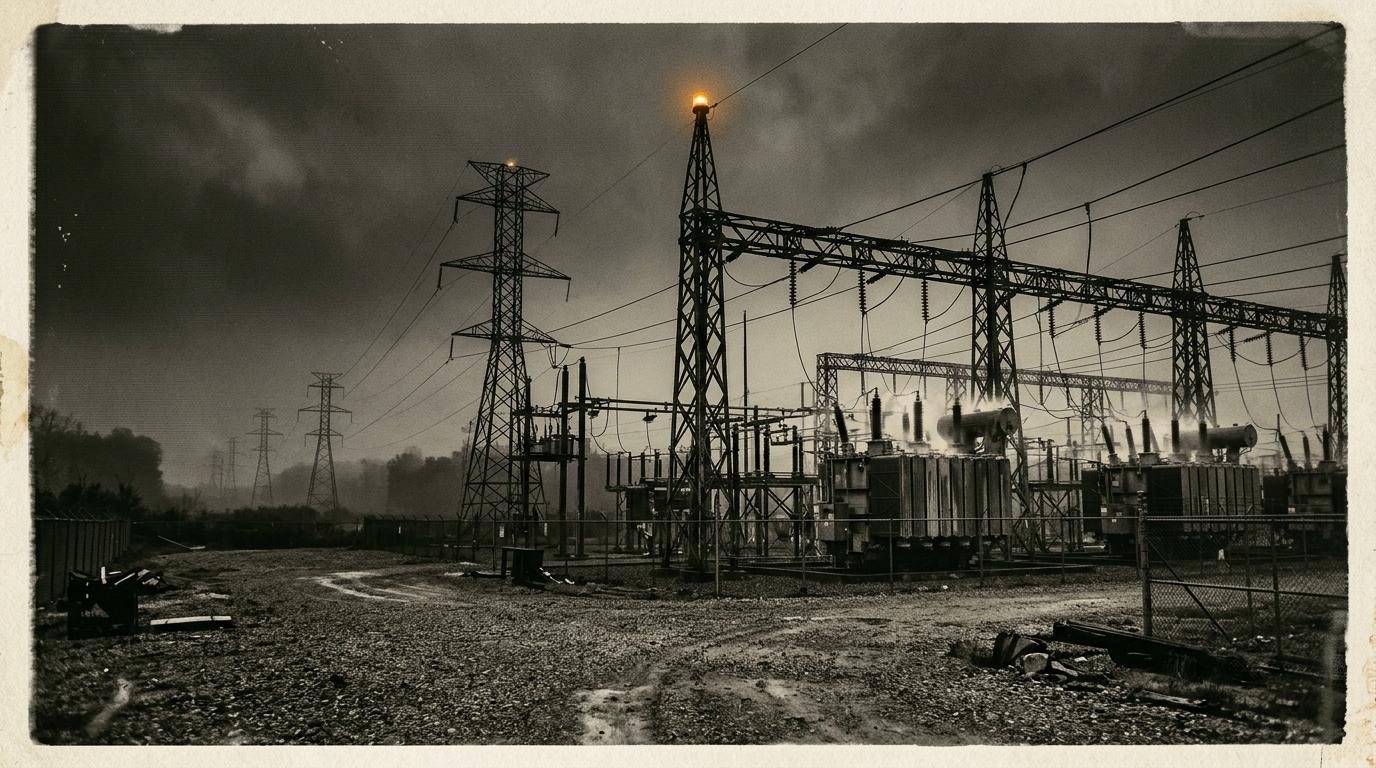
The most important number in AI this week is not a model benchmark. It is $105 billion — the ceiling Nvidia has agreed to guarantee for OpenAI’s data center campus in Pike County, Ohio. Not as an investment. As a backstop. A promise that the power bills get paid, the lease holds, and the machines keep running even if the tenant wobbles.
Reuters and CNBC reported Monday that Nvidia will provide up to $105 billion in guarantee financing for the project, which will be built and operated by SB Energy under a 20-year lease to OpenAI. The structure covers lease and power payments and maintains a minimum residual value for the site if OpenAI defaults. Nvidia is also making a separate $1.5 billion equity investment in SB Energy. The first phase is roughly 4.25 gigawatts of compute capacity, with an option for another 3.75 — up to 8 gigawatts of a single AI campus, a number that would have been unthinkable a generation ago.
This is not a loan. It is not a grant. It is a guarantee — and the distinction matters. Nvidia is not lending OpenAI money. It is lending OpenAI its balance sheet, the credibility of a company that has become the toll collector of the AI era. When the chipmaker that sells the shovels also underwrites the mine, the industry has stopped being a technology race and started being a capital formation exercise.
Why a Chipmaker Guarantees a Data Center
The obvious reading is that Nvidia wants to sell more GPUs. That is true and it is not the whole story. The guarantee does something more structural: it converts Nvidia’s market position into a financial instrument. By backstopping the lease, Nvidia ensures the campus gets built, the power gets contracted, and the demand for its own silicon is locked in for two decades. It is vertical integration through the capital stack rather than through ownership.
There is also a defensive logic. The AI buildout is the largest infrastructure bet in modern history, and it is being financed with a mix of equity, debt, and increasingly exotic structures. If that financing wobbles — if a hyperscaler blinks, if power costs spike, if the market reprices AI capex — the demand for Nvidia’s products wobbles with it. A guarantee is a way of insuring the demand curve itself. Nvidia is not just selling picks in a gold rush. It is now underwriting the claim that the gold is real.
The scale is worth sitting with. Eight gigawatts is roughly the output of several large nuclear power plants, dedicated to one campus. The earlier reports had Nvidia exploring a $250 billion guarantee before settling on the smaller number — a reminder that even the most aggressive financiers in AI are negotiating themselves down. The final structure is still being finalized, but the direction is unmistakable: the AI buildout is being backstopped by the companies that sell the compute, not just the ones that buy it.
The Balance Sheet Enters the Race
The AI arms race has always had two fronts: capability and capital. The capability front gets the headlines — the models, the benchmarks, the demos. The capital front has been quietly doing the real work, and it just changed shape. When the chipmaker guarantees the tenant’s lease, the boundary between vendor and financier dissolves. Nvidia is no longer merely selling the future; it is now on the hook for it.
That has consequences for everyone else in the stack. Hyperscalers building their own campuses now face a competitor whose supplier is also its banker. Startups trying to raise for AI infrastructure are competing against a company that can backstop a $100 billion project out of its own credibility. And regulators watching the concentration of AI compute are seeing a new kind of entanglement: a single chipmaker whose financial exposure to its own customers’ buildouts is now measured in the hundreds of billions.
Nvidia is not just selling picks in a gold rush. It is now underwriting the claim that the gold is real.— The guarantee as an instrument of demand insurance
The power question is the one nobody has solved. Every gigawatt of AI compute needs a gigawatt of electricity, and the grid is not getting bigger fast enough. Ohio was chosen for its access to power, land, and a state government eager for the jobs. But the guarantee only covers the money, not the megawatts. The campus will still need the grid to deliver, the utilities to build, and the regulators to approve — none of which can be underwritten by a balance sheet.
What This Means
- The chipmaker is now the financier. Nvidia’s guarantee converts its market position into a financial instrument — vertical integration through the capital stack, not ownership.
- Demand is being insured, not just supplied. By backstopping the lease, Nvidia protects the demand curve for its own silicon across a 20-year horizon.
- Power, not money, is the binding constraint. The guarantee covers payments, not megawatts. The grid remains the un-underwritten risk in every AI buildout.
The models get the headlines. The balance sheets get the buildout. This week, the biggest player in AI decided it would rather guarantee the future than merely sell into it.