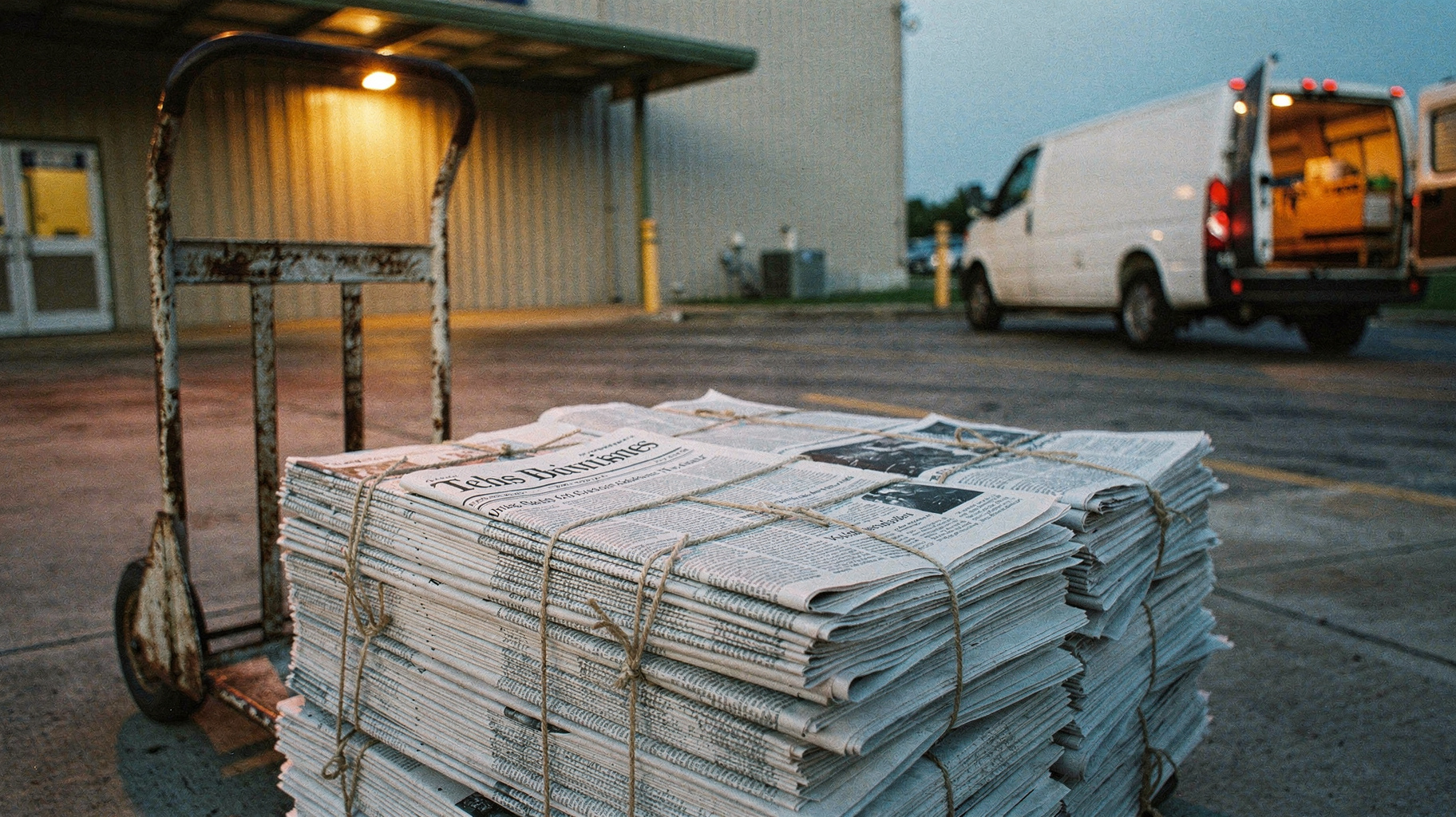
The papers suing AI companies used to be national brands — the Times, the Intercept, the Atlantic. On Friday the wave reached the county desk. The Seattle Times and Newsday filed a joint federal lawsuit in Manhattan against OpenAI and Microsoft, alleging the companies copied their journalism — scraped from the open web and lifted from behind the paywall — to train and operate ChatGPT, Copilot, and Bing’s answer features. Regional journalism, the thinnest margin in American media, is now a named plaintiff.
The complaint runs on two claims that matter beyond the two newsrooms. First, substitution: AI answers that summarize a story remove the visit, and the visit is the revenue — one industry figure cited in reporting puts search-referral traffic to midsize publishers down 47 percent over two years. Second, and stranger: trademark dilution, over AI outputs that fabricate content and attribute it to the papers — the model putting words in the paper’s mouth that the paper never wrote. A training-data dispute, in other words, has grown an impersonation count.
When the model invents a byline, the harm stops being aggregated and starts being personal.
The Remedy Is the Message
The requested relief will draw less coverage than the damages and deserves more. The papers are asking for destruction or impoundment of the copied works and training datasets — and, potentially, the models that incorporate them. That is the demand the New York Times case normalized and this one inherits: that infringement, proven, can reach the weights themselves. OpenAI’s position remains that training on public text is fair use; the government’s Sept 2 filing backing OpenAI in the Times case gives that defense institutional cover. Friday’s filing answers with a different kind of plaintiff — not the national title with a licensing desk, but the metro daily and the Long Island paper that collectively employ the people who covered the story locally.
The timeline is the quiet fact. December 2023, the Times sues. April 2024, the first newspaper coalition. Mid-2026, the Ziff Davis wave, government intervention, sanctions motions. June brought the hundred-paper coalition. September 2026, the regionals. Each cycle, the plaintiffs sit farther from the media capital and the case gets more existential — the national titles are negotiating leverage and licensing deals; the Seattle Times is asking whether there will be a local paper for the model to summarize at all. The answer features ship to users this fall. The people who supply their raw material are now in court, two years in, asking for the machines themselves.
The Takeaways
- The Seattle Times and Newsday sued OpenAI and Microsoft on September 4 in the Southern District of New York — the first regional papers in the wave the New York Times began in December 2023.
- The complaint alleges scraping of open and paywalled articles to train and operate ChatGPT, Copilot, and Bing answer features.
- The substitution claim: AI answers that summarize reporting remove the visit; cited industry data puts midsize publishers’ search referrals down 47% year over year.
- Trademark dilution claims target fabricated content attributed to the papers — AI putting words in a byline that the byline never wrote.
- Requested relief includes destruction or impoundment of copied works, training datasets, and potentially the models that incorporate them.