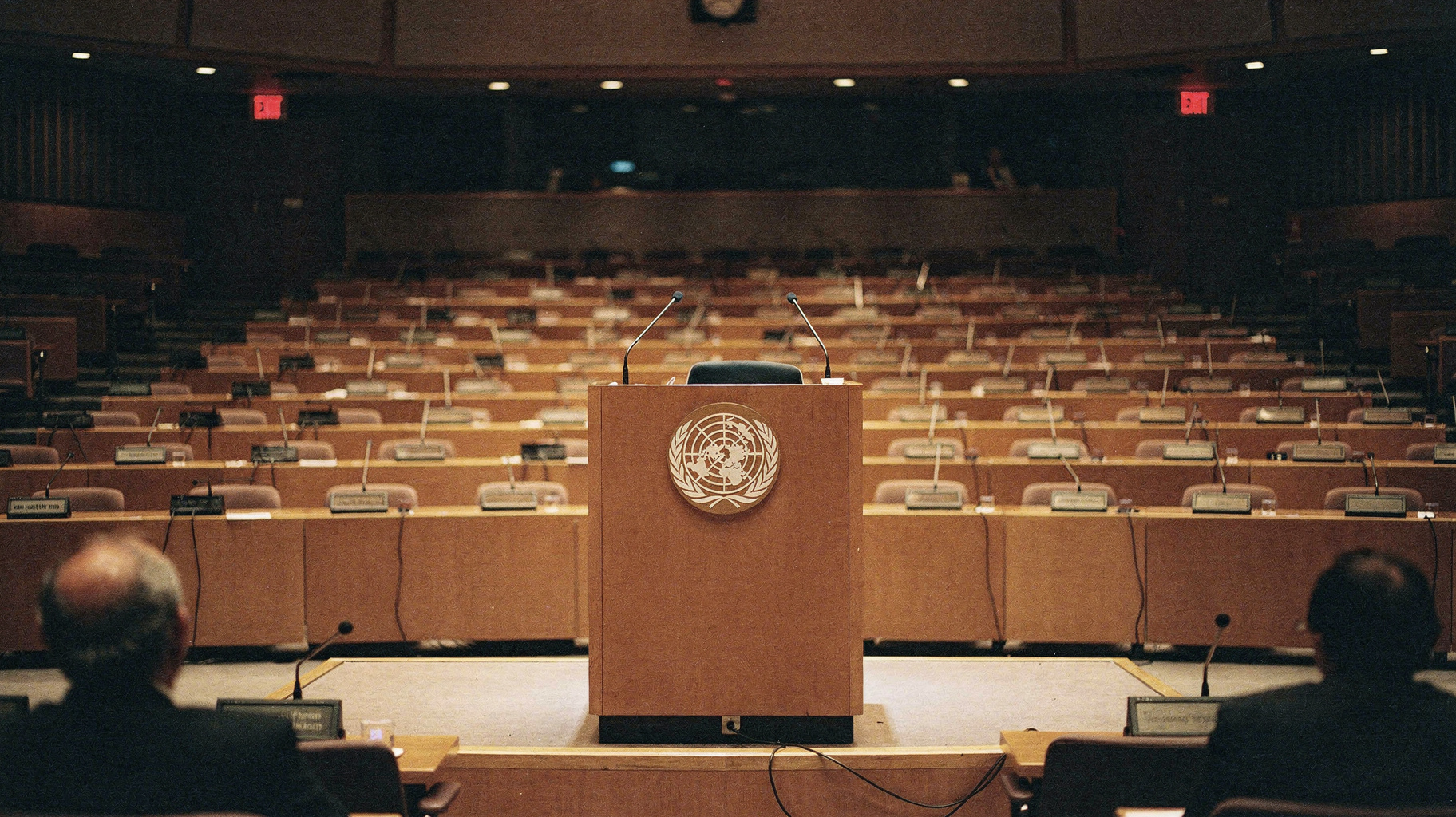
President Trump told the United Nations General Assembly on September 22 that the United States will henceforth call artificial intelligence superintelligence in its documents, saying the word artificial makes the technology sound fake. From this point forward, all of United States documents and hopefully the world's will be changed to use the much more accurate term super as opposed to artificial, he said. No executive order implementing the change was published, and no White House announcement explained which agencies would act on it.
The sentence was delivered alongside a second, more consequential one: that the United States would not rein the technology in. Trump characterized warnings about superintelligence as a hoax and rejected the case for international control, at the same podium where other governments have spent the year arguing for exactly that. Reporting from Reuters, Axios, and The Hill describes a speech that coupled a renaming with a refusal - the two halves of the same position.
The terminology point is not trivial in this domain, because most of the vocabulary is contested. Superintelligence already has a technical meaning: an intelligence that surpasses human capability across the board. Applying it to present-day systems is either a rhetorical escalation or a category error, depending on who is listening, and the White House has not said which one it intends. What it does do is move a descriptive phrase into a promotional one inside official documents.
An AI Force with no shape yet
Three days earlier, Trump said he would create an AI Force and appoint an AI czar, comparing the structure to the Space Force. No person was named, no authority described, no budget attached. Several outlets reported the same omission. A body that has been announced but not constituted is a placeholder, and it is now the entity that would presumably inherit whatever the renaming implies.
None of this exists in isolation. In August the administration backed OpenAI in the New York Times copyright case, arguing from the side of faster development. In September, a federal judge in Minnesota let a state law banning AI nudification stand against an industry challenge - a reminder that the states are legislating where the federal government has not. Congress has meanwhile produced dueling agent-liability bills rather than a framework. The federal position, to the extent there is one, has been expressed through speeches rather than statute.
What the podium cannot do
A president can direct agencies by memorandum and can set the tone of a government's language, and the second of those is what actually happened on September 22. Naming a thing is cheap and reversible; it requires no appropriations, no rulemaking, and no vote. It also produces no constraint on the technology, which is the point: the announcement is not a policy that does something, it is a policy that sounds like one.
The substantive material remains where it was before the speech - in district courts hearing negligence and antitrust claims, in the European Commission's Article 91 questionnaires, and in a proposed rule in Brussels barring young teenagers from talking to chatbots. A rebrand changes no capability, no deployment, and no safeguard. It changes the word in the document, and the document is still being written by someone else.
What the Room Heard
The delegates in that hall are the audience for the other half of the speech, and the other half was a refusal. Some of them represent governments that have spent the year building exactly the international machinery the president dismissed - the European Commission's information requests to model providers, Germany's written acknowledgement that governance without Washington and Beijing is not viable, an emerging Chinese standards framework. All of that work assumes the largest labs will one day sit at the same table. The September 22 remarks say they will not, at least not on terms set by anyone else. For the European and Chinese regulators proceeding anyway, the practical effect is a narrower jurisdiction and a longer wait, not a reason to stop - which is why the Commission's questionnaires went out, and will keep going out, regardless of what is said from a podium in New York.
The Takeaways
- Trump told the UN General Assembly on September 22 that U.S. documents will use superintelligence instead of artificial intelligence.
- He rejected international control of AI and called warnings about superintelligence a hoax; no implementing order was published.
- Three days earlier he announced a planned AI Force and AI czar without naming a person, authority, budget, or timeline.
- The remarks carried no disclosure, evaluation, liability, or procurement rule - the binding decisions this year have come from courts and states.