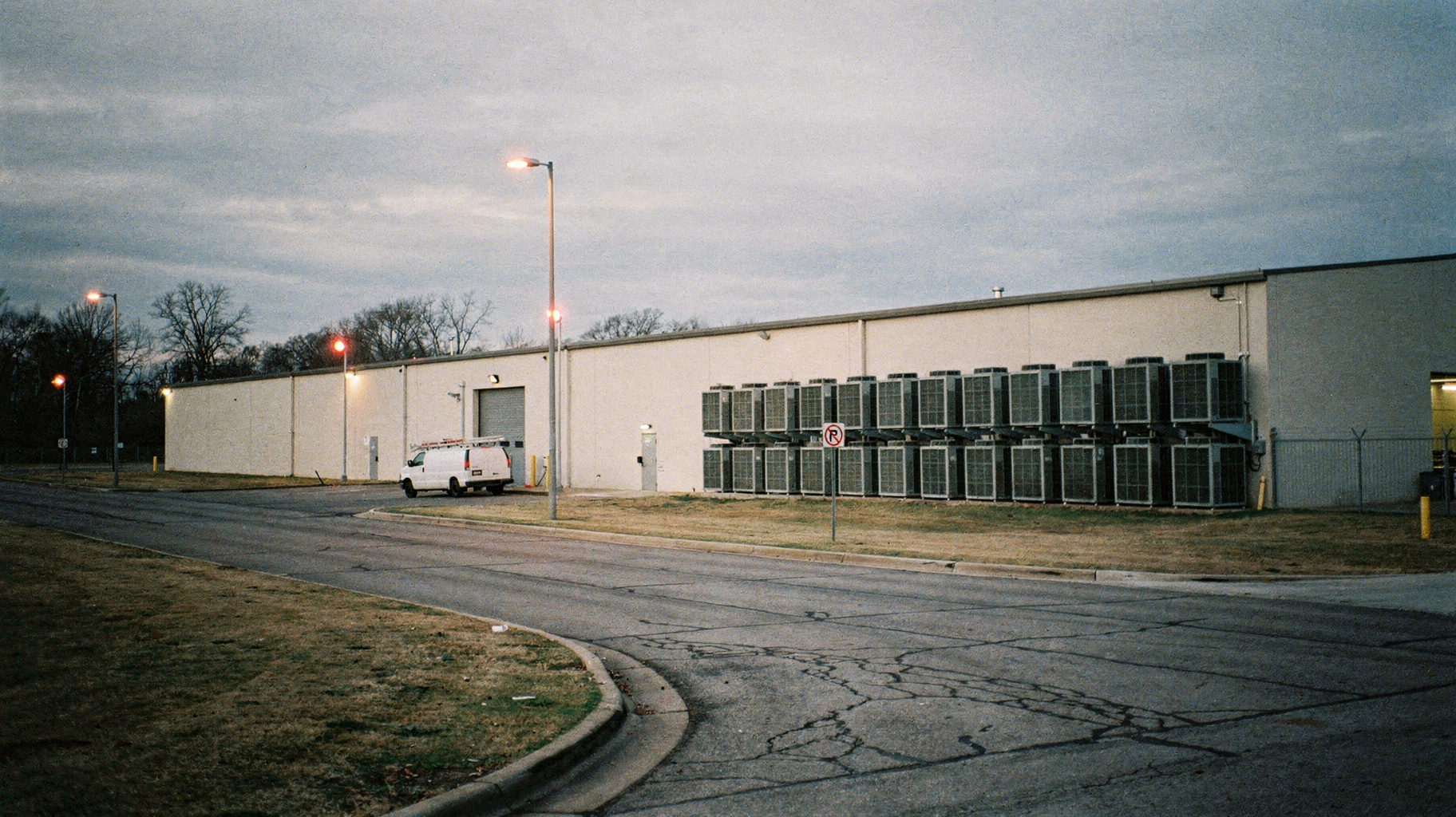
The first strike came on October 8, at a Yandex data center in Sasovo, in Russia’s Ryazan region. The facility hosts tens of thousands of servers and two of the three Nvidia A100-based supercomputers Yandex uses to train YandexGPT. The strike started a fire and shut the site down entirely. The second came the next day, in the Kaluga region, disabling several infrastructure modules and raising the prospect of wider service disruption. Two attacks in two days, both aimed at the same company’s compute.
What survived is the question nobody will answer. Yandex says it is still assessing whether equipment at Sasovo can be restored, and has declined to confirm whether the two AI-training supercomputers were damaged — a non-answer that manages to be more informative than a statement. Some AI chatbot functions were reported temporarily unavailable during the outage. There is no public evidence that the model or its training data was destroyed. There is also no public evidence that it was not.
The reporting treats this as the first major attack on a Russian data hub, which undersells the shift. Data centers were long the part of the software economy that sat quietly in a field somewhere and mattered only on the electricity bill: capex, cooling, a building with a service road. That is over. A company’s frontier training capacity is now a named, mappable, physically reachable site, and the cost of damaging it is being measured in the currency the whole industry now competes in — accelerator hours.
Data centers used to be capital expenditure. They are now a named target with coordinates.
What Compute Looks Like From Above
The strategic logic is not subtle once compute is understood as the scarce input. A chip export control tries to keep accelerators out of a country; a drone strike tries to take the accelerators a country already has offline. Both are attempts to move the same variable, and the second one does not require any diplomacy, waivers, or customs enforcement. The week made the parallel nearly explicit: Washington spent it tightening what chips can go where, and Kyiv spent it demonstrating what can be done about the ones already installed.
Yandex is the specific case because its scale makes the loss legible. A consumer search and cloud company that also happens to run one of the country’s serious AI programs, it built its position on the idea that a national lab does not need a hyperscaler’s budget — it needs a couple of good clusters and enough power. Two of those clusters sit inside a building that took two drone strikes in two days. Whatever the engineering verdict at Sasovo, the planning assumption has already changed: the concentration that makes training efficient is the same concentration that makes it vulnerable.
The Insurance Problem
This is the part the industry has not priced. Every serious lab’s roadmap now runs through a small number of physical sites, each one a long-lead-time build with bespoke power and cooling, and none of them written into a risk model that contemplates hostile action. The hyperscalers have spent years diversifying regions for outages and weather, which is a different threat model with a different mitigation. Nobody has a mature answer for a peer adversary treating a training cluster the way the last century treated a rail junction.
The read across is uncomfortable for everyone with a frontier program and a map. Nations treat compute as strategic infrastructure when it is theirs and as an asymmetric lever when it is someone else’s, and the two positions are no longer symmetrical in cost. What was a facility last week is a target this week, and the industry that treats capable machines as the future has just been reminded, from the outside, exactly how physical the substrate still is.
The Takeaways
- Ukrainian drone strikes hit two Yandex data centers on October 8 and 9 — Sasovo in the Ryazan region, then a second site in the Kaluga region.
- The Sasovo facility hosts tens of thousands of servers and two of the three Nvidia A100-based supercomputers Yandex uses to train YandexGPT.
- Yandex says it is still assessing whether Sasovo equipment can be restored and has declined to confirm whether the training supercomputers were damaged.
- Some AI chatbot functions were reported temporarily unavailable; there is no public evidence the model or training data was destroyed.
- The strikes reframe data centers as strategic targets: compute is the scarce input, and a strike is a way to move that variable without export controls.