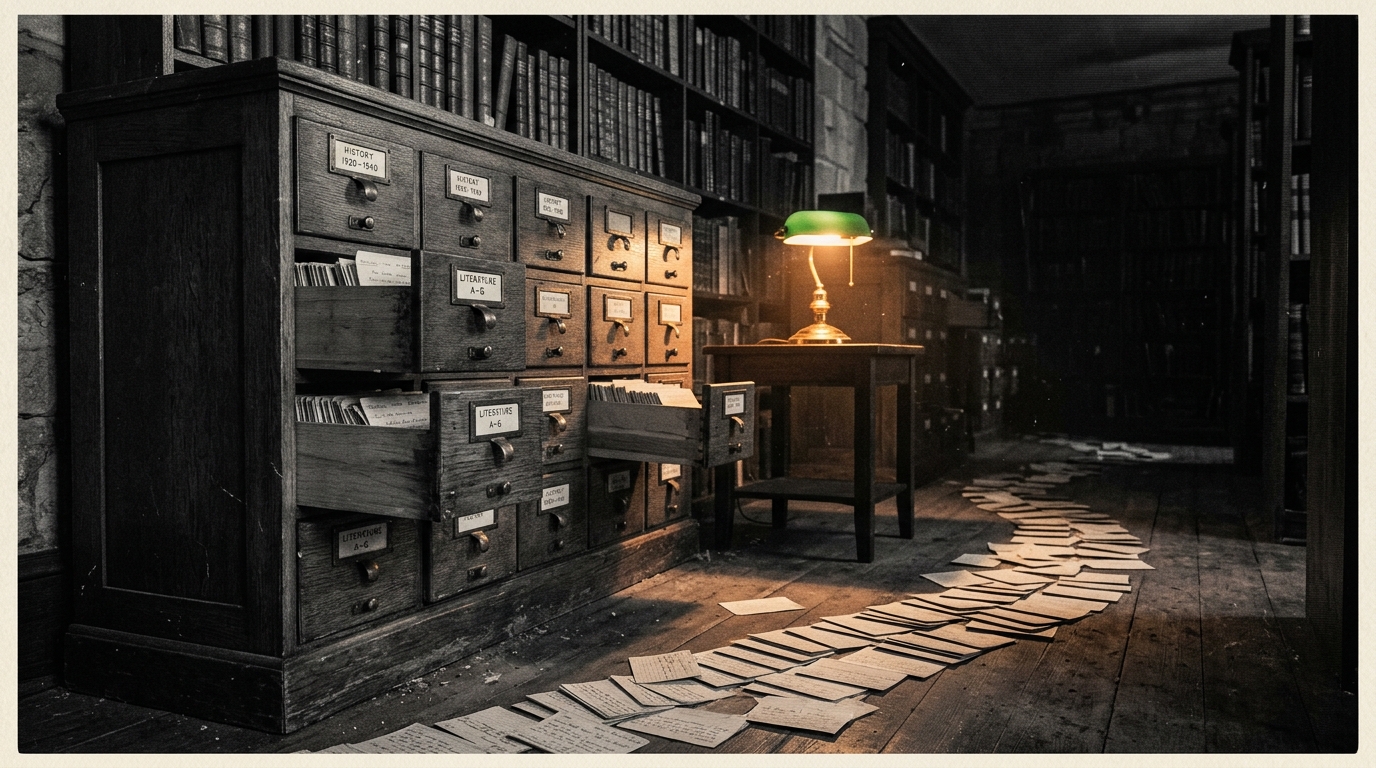
The most instructive breaches are the ones that reveal a hierarchy. Alation confirmed this week that it found unauthorized activity in one of its systems, after an incident that briefly degraded service for some customers. The company says it is still investigating whether data was stolen or exfiltrated. What makes the incident worth more than a press-release paraphrase is what Alation is: a data catalog. The product's entire purpose is to know where everything is.
Every enterprise now runs on a sprawl of data platforms — warehouses, lakes, SaaS exports, legacy databases nobody dares decommission. The data catalog is the layer that makes the sprawl navigable: it indexes the tables, maps the lineage, tags the sensitive columns, and records who owns what and who may access it. It is, in the most literal sense, a map of where everything valuable is kept. It is also, increasingly, a list of exactly where the interesting doors are, and which ones are unlocked.
That is the uncomfortable arithmetic of the catalog category. The same metadata that makes a data estate governable makes it targetable. An attacker with a catalog dump doesn't need to exfiltrate terabytes to find the crown jewels — the catalog has already found them, labeled them, and drawn the arrows. The value of the map scales with the value of the territory, and the territory is the entire modern enterprise.
The Metadata Heist
Security teams have spent a decade learning to protect data. They are now having to learn to protect descriptions of data. The distinction sounds academic until you model the attacker. A credential thief wants access; a metadata thief wants orientation. With a catalog in hand, the intruder's first week of work — reconnaissance, privilege mapping, target selection — is already done. The breach stops being a search and becomes a shopping list.
Alation's disclosure is early, and the honest position is that nobody outside the investigation yet knows what was taken. But the category logic holds regardless of the outcome. The catalog sits at a privileged vantage: it doesn't necessarily hold the data, but it holds the relationships, the classifications, the access policies, and the names of the humans who own each system. For an attacker planning a multi-stage intrusion, that is the difference between wandering the halls and walking directly to the right office.
When the Map Is the Territory
There is a design lesson here that extends well past security. Every layer of abstraction that makes modern systems usable — catalogs, orchestrators, API gateways, agent frameworks — concentrates a description of the system into one place. Concentration is convenience for the operator and force multiplication for the intruder. The industry keeps building control planes without fully pricing in that they are, by construction, high-value targets.
The agent era sharpens the edge. An AI agent given enterprise access will read the catalog first — that is what a competent agent does, because the catalog is how it learns the estate. Which means the catalog is now not just a target but an input: whatever it says, the machines will act on. Poison the map and you misdirect every traveler who trusts it. The catalog category's security posture just became an AI-safety question, and almost nobody's threat model has caught up.
Attackers have stopped digging through the vault. They're stealing the building directory.- The metadata era of intrusion
What Changes
Expect the catalog vendors to respond the way platform vendors always do: by moving the sensitive layer behind harder authentication, tighter segmentation, and eventually their own AI-driven anomaly detection. Expect enterprise buyers, in the next procurement cycle, to start asking catalog vendors the questions they ask database vendors — about encryption at rest, about tenant isolation, about what metadata leaves the boundary. The category grew up selling navigation. It is about to be re-priced as infrastructure that must defend itself.
The rest of us get a cleaner mental model out of the week. The vault was never the only thing worth stealing. In any system complex enough to need a map, the map is the first thing a sophisticated thief takes — because with the map, everything else is a matter of time. Alation's attackers understood that. The question for every enterprise running a catalog, an orchestrator, or an agent framework is whether their own threat model has caught up to the same insight.
What This Means
- Metadata is the new crown jewel. A catalog breach hands attackers reconnaissance, privilege mapping, and target selection pre-completed. The search becomes a shopping list.
- Control planes are targets by construction. Catalogs, orchestrators, gateways, agent frameworks — every abstraction layer concentrates system knowledge, and concentration attracts intrusion.
- The agent era raises the stakes. Agents read the catalog to learn the estate, which makes catalog integrity an AI-safety question, not just a security checkbox.
The burglars didn't hit the vault. They took the floor plan — and in a modern enterprise, that's the more valuable theft.