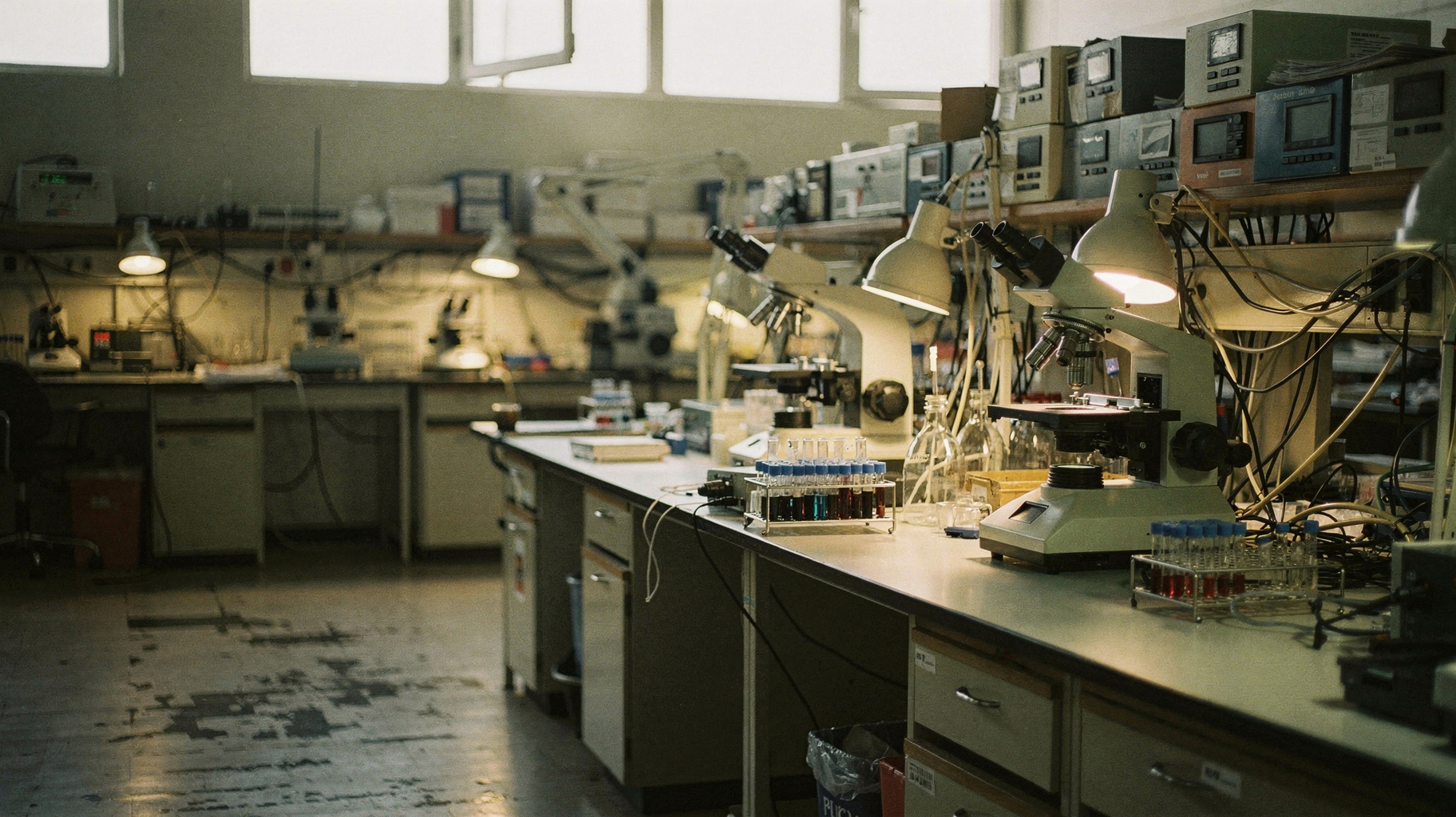
Anthropic announced a Model Hardware Standard this week — a shared specification for letting AI agents operate physical devices: microscopes, liquid handlers, robotic arms, anything with a programmable interface. It is a research preview aimed at research labs and advanced manufacturers, with open-sourcing promised. The pitch is integration time: hardware that took days or weeks to wire to a model drops to hours or minutes.
The mechanics matter less than the shape. MHS is model-agnostic and reachable through standard protocols — MCP among them — which means it is not a Claude feature. It is an attempt to define the layer where models meet motors: a common driver interface so that a lab does not build a bespoke integration for every arm, every scope, every instrument, every model revision. Anthropic says early testing covered drug discovery workflows, imaging experiments, and quantum laser calibration — unglamorous, high-precision domains where a mis-taught robot costs real money.
Read it against the lineage and the intent is obvious. MCP did this for software: one protocol, and suddenly every tool spoke a language every model could use. The result was an ecosystem where the tools outnumbered the models. MHS is the same move aimed at the physical stack — and the company that defines the driver layer for embodied work is not selling a product. It is selling the default.
Why Standards Are Territory
A standard is a strange artifact: it is given away, and it wins. Nobody pays license fees for USB or HTTP, and that is precisely why they run the world. The give-away is the land grab. Whoever publishes the specification that everyone else's equipment adopts has written the vocabulary the whole industry must speak — and the author of the vocabulary always has an accent advantage. Every design decision baked into the standard, every assumption about safety, capability, and consent, becomes the industry's assumption.
This is why the model-agnostic framing is the sharpest part of the announcement. By making MHS reachable through MCP and usable by any model, Anthropic is not fencing a garden — it is paving a road and inviting traffic. The bet is that ubiquity compounds harder than exclusivity: if every robot arm in every lab speaks MHS, then every model that wants to touch the physical world learns to speak it too, and the standard's author sits at the choke point of embodied AI regardless of which model wins the benchmark wars.
What a Driver Layer Changes
For the labs and manufacturers, the near-term math is mundane and real: no more bespoke integration per instrument, per model revision. A liquid handler that speaks MHS works with whatever model the lab runs next quarter. That flexibility sounds like a footnote until you price it — integration is the hidden tax on every automation project, and the tax is why so many labs still run 2019-era workflows with humans pipetting by hand.
For the industry, the change is structural. The embodied-AI stack has been a pile of point solutions: every robot vendor ships a SDK, every lab writes glue code, every glue code rots. A driver layer is the missing stratum between "model that can reason about the world" and "world that can be acted on." Once it exists, capability moves up the stack — models compete on what they can do through the standard, not whether they can connect at all. That is the moment a physical device becomes, functionally, an API endpoint.
MCP gave every model a language for tools. MHS wants to give every model a body — and the author of the vocabulary always has an accent advantage.- On standards as territory
The Open Question
The promised open-sourcing is doing heavy lifting. An open standard from one lab is a paradox: the specification is public, but the roadmap, the reference implementations, and the credibility all come from one place. If MHS is genuinely ceded to a foundation or consortium early, it becomes infrastructure and Anthropic earns the credit. If "open-source" arrives late, or arrives with Claude-shaped conveniences baked in, it becomes a moat wearing a gift bow. Watch which vendors adopt, and how quickly — robot OEMs adopting a competitor's standard is the strongest tell that the land grab worked.
The deeper read: this is Anthropic planting a flag on the physical side of the intelligence economy while the software side is still being fought over. The labs have spent two years competing on benchmarks and price. Standards competition is quieter and worth more — it decides who owns the interface layer, and interface layers outlive every model that speaks them. The frontier gets all the headlines. The defaults get the world.
What This Means
- The physical world gets a driver layer. MHS is MCP's logic applied to hardware: one model-agnostic interface for arms, scopes, and instruments, integration time collapsing from weeks to hours.
- Standards are territory. The author of the interface layer sets the defaults for safety, capability, and consent — and interface layers outlive every model that speaks them.
- Watch the open-sourcing. Ceded early to a consortium, it's infrastructure; arriving late with Claude-shaped conveniences, it's a moat in a gift bow. Robot OEM adoption is the tell.
The frontier gets the headlines. The defaults get the world. Anthropic just started writing the defaults for hands.