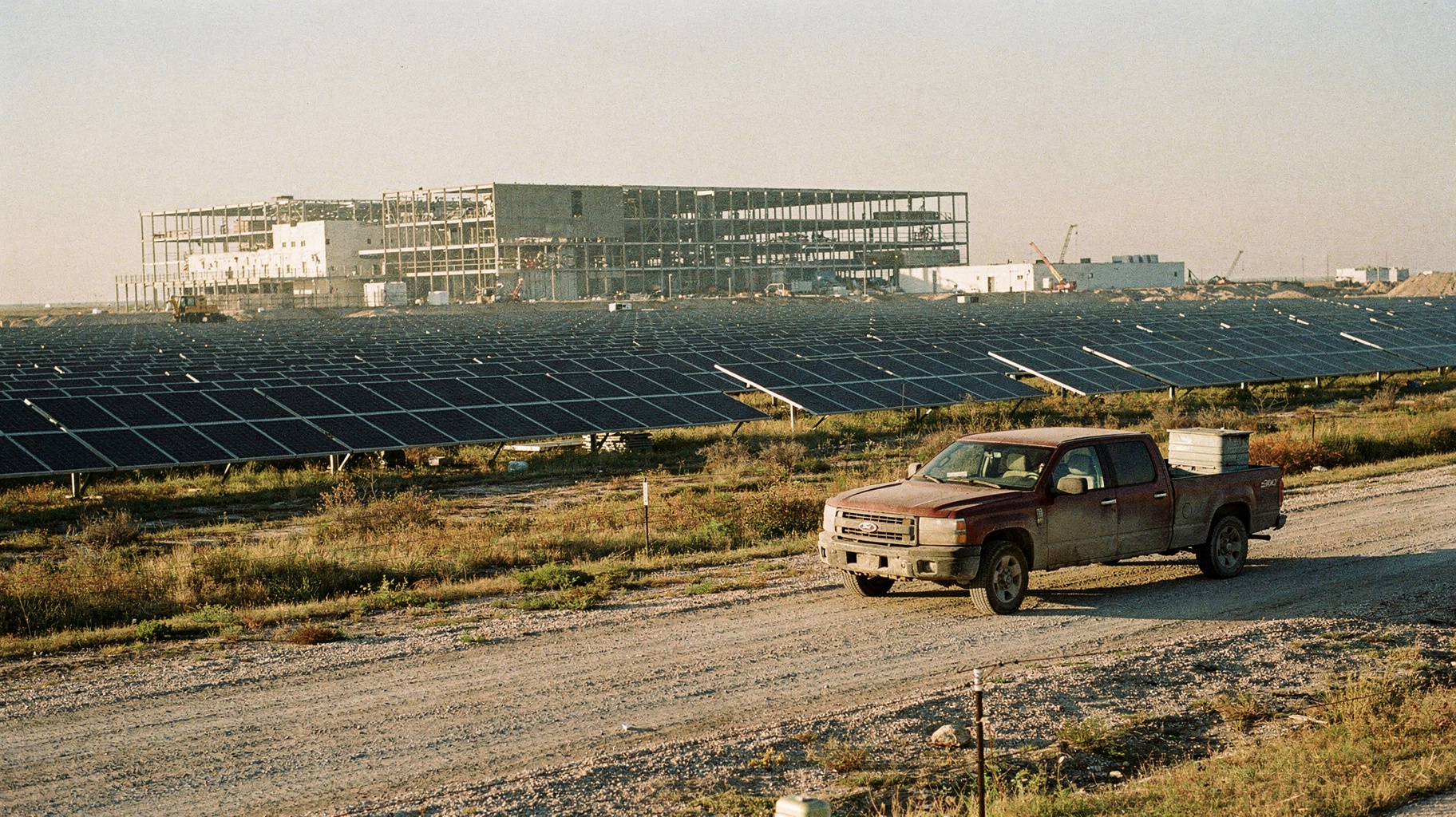
In commercial real estate, landlords compete on location and rates. In AI real estate, the landlord gives the tenant equity. Draft IPO documents reviewed by The Wall Street Journal and reported by Reuters reveal that SB Energy — the SoftBank-backed power and data-center developer — issued OpenAI warrants worth about $5.5 billion as of the end of June, an incentive package designed to lock the AI company into twenty-year lease agreements on large campuses in Ohio and Texas. OpenAI did not invest in SB Energy. SB Energy invested in OpenAI’s signature on a lease.
The number was not static, which is the tell. The warrants were valued at $3.6 billion in January; by June’s end, $5.5 billion. Whatever SB Energy was paying for, its price went up as OpenAI’s star rose — the incentive is denominated in the tenant’s own success, which is either elegant alignment or a bubble drawing a picture of itself, depending on where you stand.
The Economy of the Sure Thing
Strip the deal to its anatomy. SB Energy is building gigawatt-scale power and data-center capacity — the physical substrate of the Stargate buildout. The riskiest part of that business is not construction; it is tenancy. A campus without an anchor AI tenant is a very expensive field. So the developer pays the anchor, in equity, to guarantee two decades of rent. The warrants are not a perk in any casual sense — they are the price of certainty, and certainty is the scarcest commodity in the compute economy. Everyone in the chain is bidding for it: chipmakers for orders, utilities for load, developers for tenants, model companies for power.
What makes the disclosure potent is the timing: these numbers surfaced not in a partnership announcement but in draft IPO paperwork — the moment when SB Energy’s private incentives had to become public math. The filing will force a valuation on a relationship that both parties presumably preferred to keep qualitative. Wall Street now gets to underwrite the circularity explicitly: a SoftBank-backed entity granting billions in equity to its anchor tenant, whose own backers include SoftBank, to support leases against future AI revenue.
Watch three things from here. The final IPO prospectus — if the warrants survive disclosure at their stated value, the AI power trade’s incentive economics become public precedent. Whether other power developers follow with tenant-equity structures of their own. And how OpenAI’s own balance sheet treats windfall warrants it received for agreeing to buy electricity — because an incentive that valuable starts to look like revenue, and revenue has auditors.
The Takeaways
- Draft IPO documents show SB Energy issued OpenAI warrants worth ~$5.5 billion by end of June, up from $3.6 billion in January (WSJ/Reuters, Aug 31).
- The warrants are an incentive for OpenAI to sign 20-year leases on large campuses in Ohio and Texas — equity paid by the landlord to the tenant.
- The structure prices the AI buildout’s scarcest commodity: certainty of tenancy, not power or silicon.
- The disclosure arrives via IPO paperwork, making private incentive economics public math for the first time.
- Watch the final prospectus, copycat tenant-equity deals, and how OpenAI accounts for the windfall.