The Hall That Holds the World
The UN General Assembly Hall is the most recognizable meeting room on Earth. For COP30 in Belém, we rebuilt it — four floors, eighteen meeting rooms — for a climate conference most of the world could only attend through a screen.
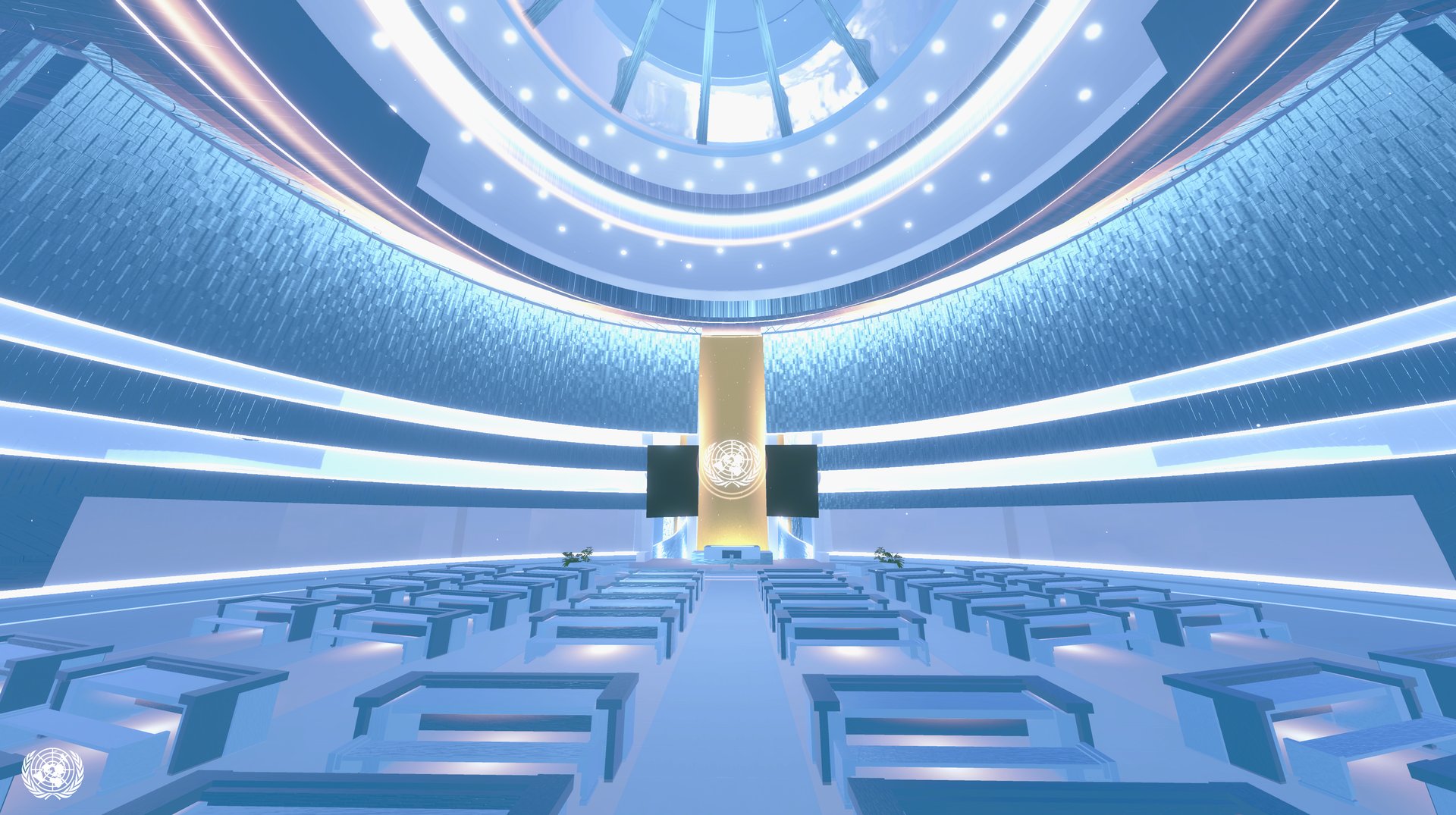
Start with the arithmetic that made the room necessary. A climate conference fits a city; the climate fits nobody's conference hall. COP30 was the first ever held in the Amazon — Belém, at the edge of the forest the whole exercise exists to protect — and the Presidency knew before the invitations went out that most of the world could not come. Seven million people, give or take, with an interest, a connection, and no boarding pass. The question traveled down the line until it reached us, and it arrived shaped like a building: could the most recognizable meeting room on Earth be rebuilt, floor by floor, for people who will never stand in the original?
The commission came through UNDP Brazil, in partnership with the COP30 Presidency — part of a platform the UN press office would later describe as opening a new era of global climate participation. Our piece of it was specific: the Virtual Assembly Hall. Not a stage. Not a broadcast. The room itself — the one with the marble and the golden curtain in New York — reimagined as a place a farmer in Pará could walk into from a phone.
A building in four floors
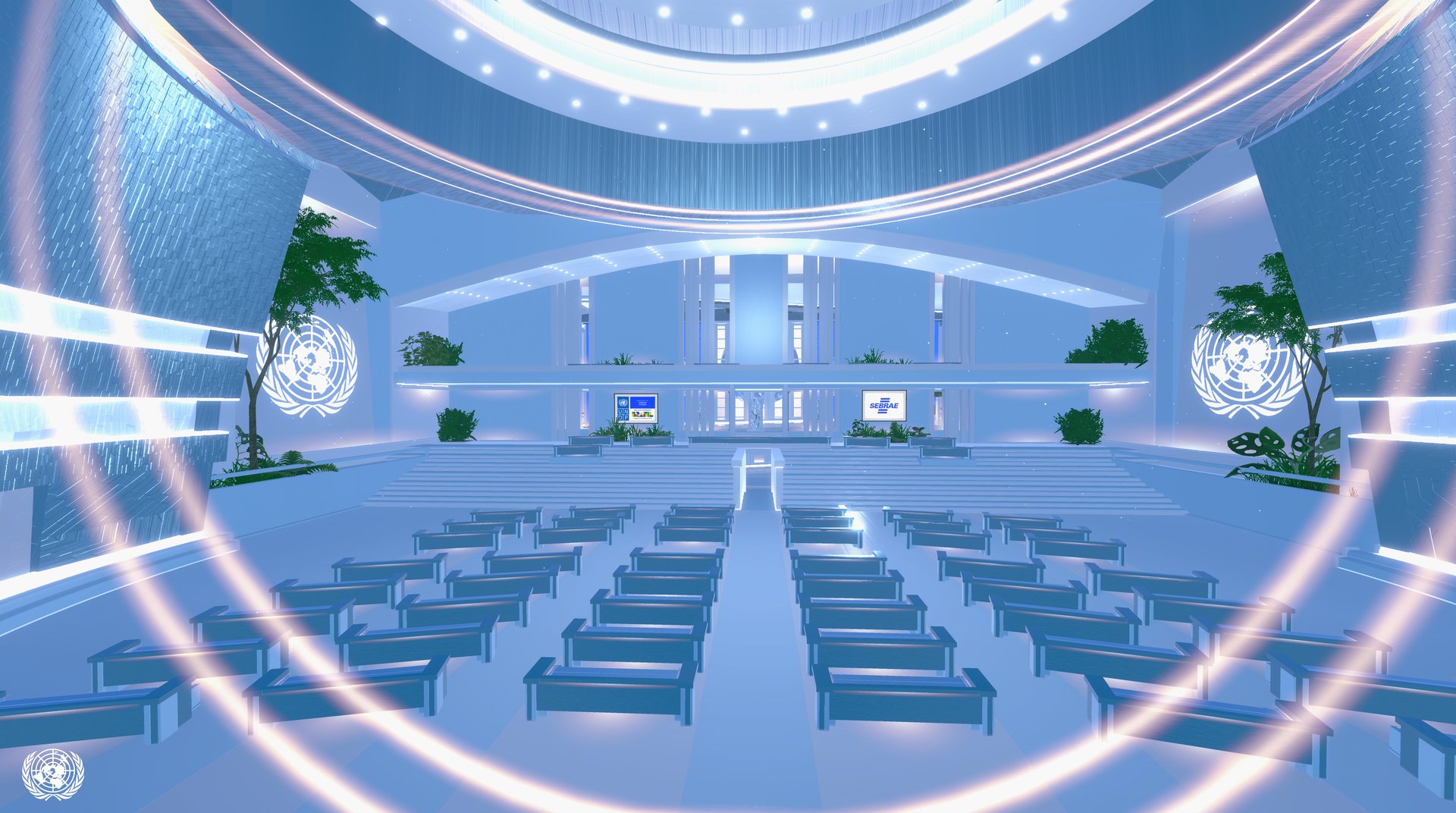
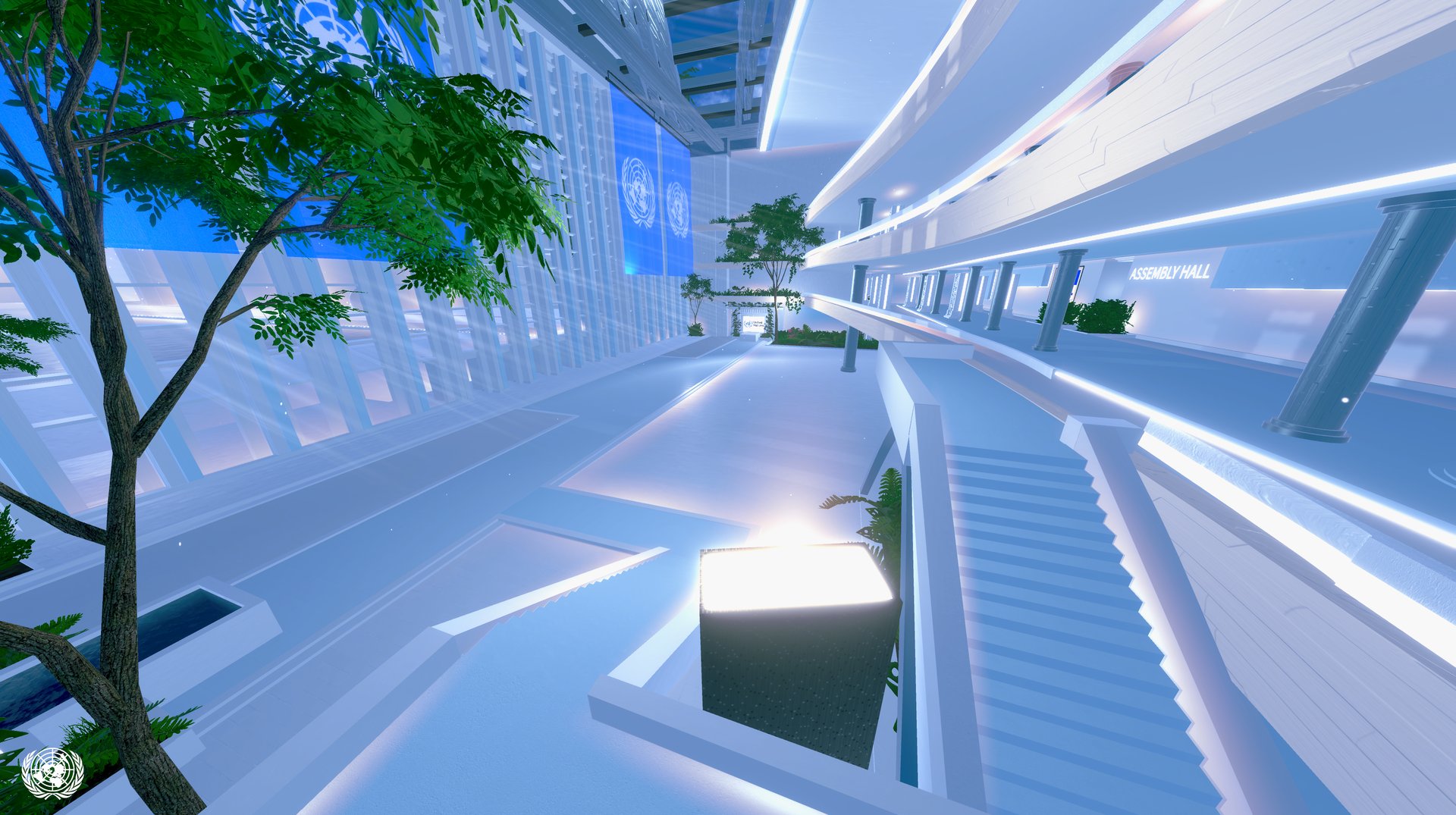
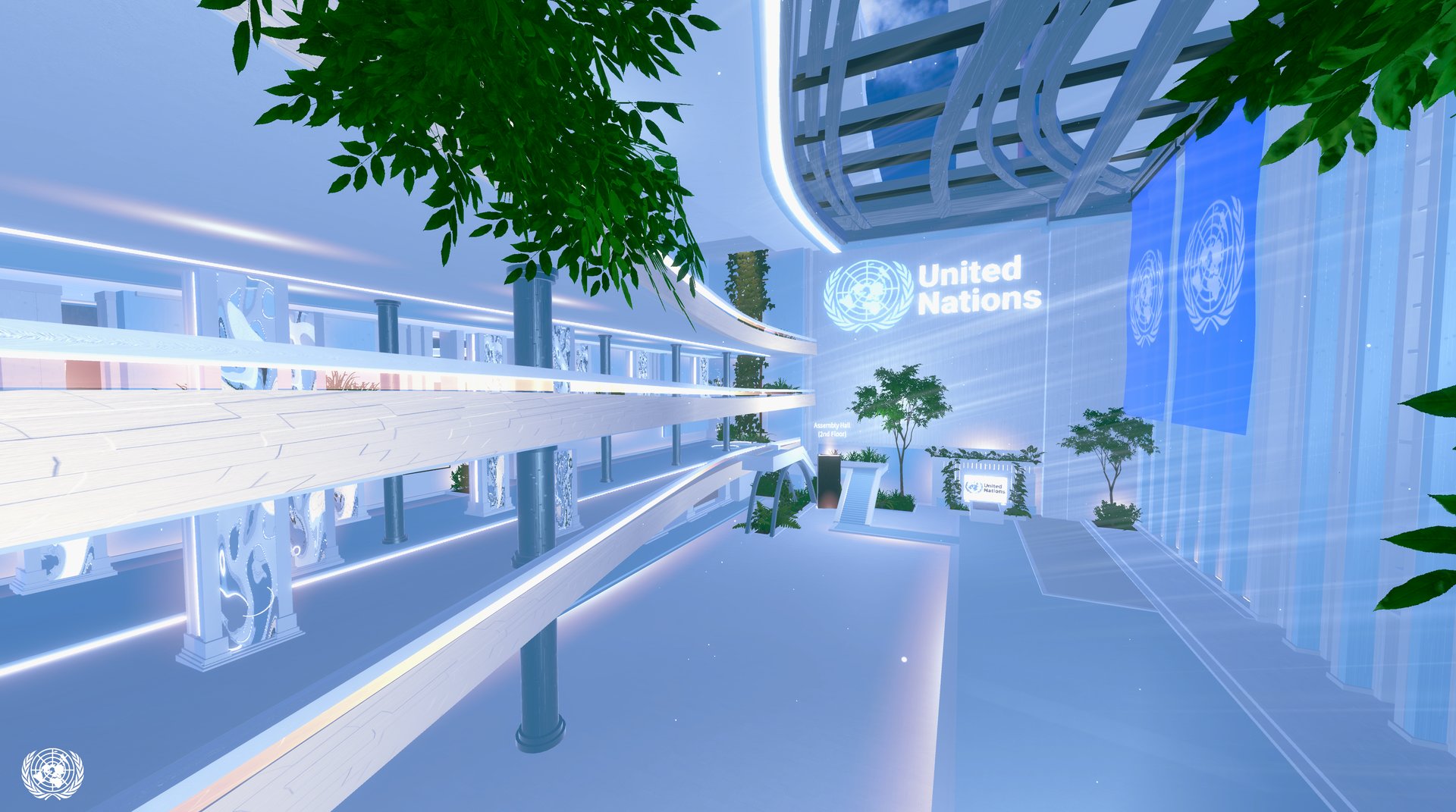
What visitors got was a working building, not a backdrop. The lobby came first — the entry point, sightlines to everything, pathways that made sense before you read a sign. From there the hall climbed: three full floors plus an open fourth, connected by stairs and elevators, because a virtual room that excludes someone who can't manage a staircase has failed before anyone says a word about climate.
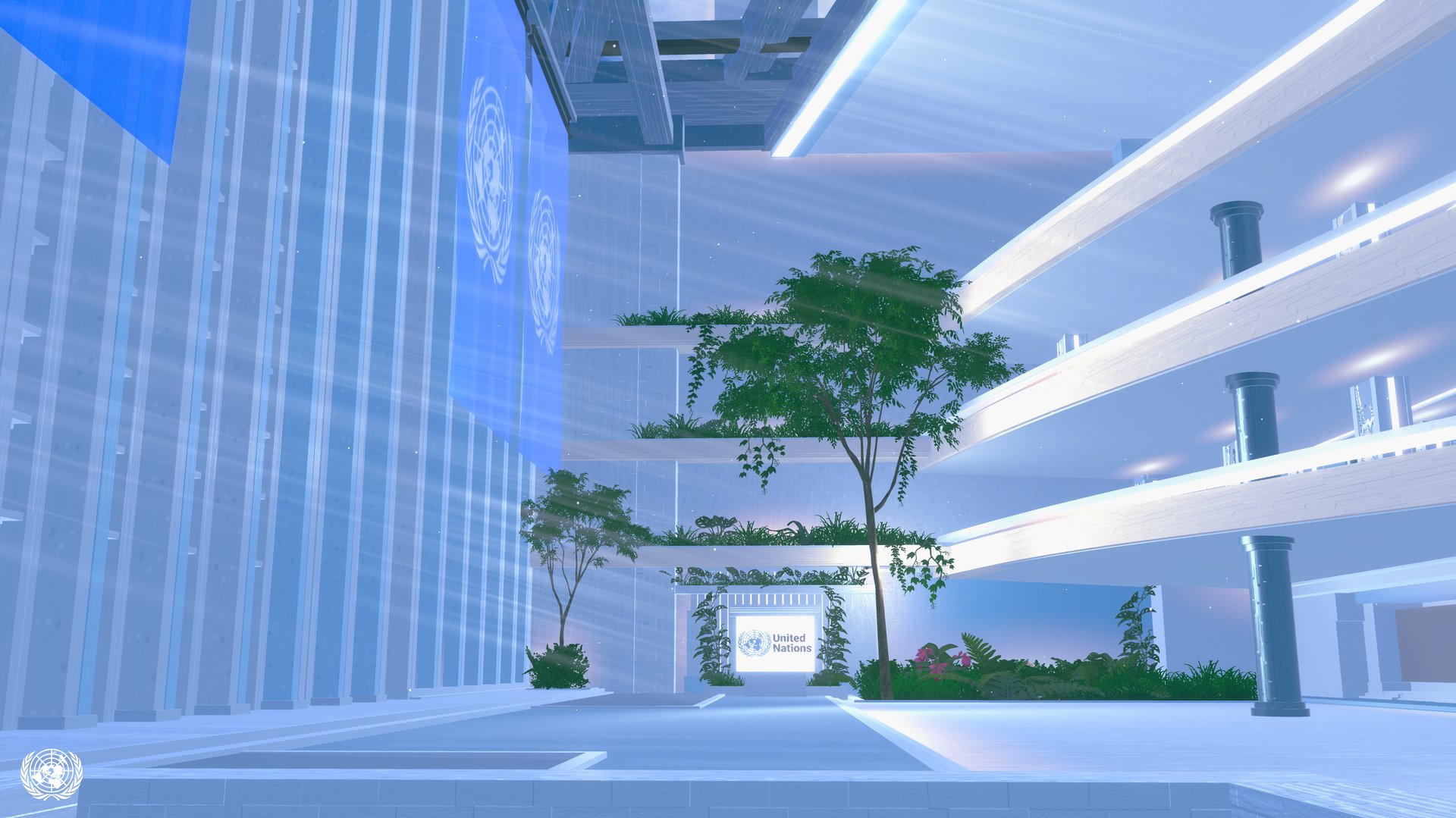
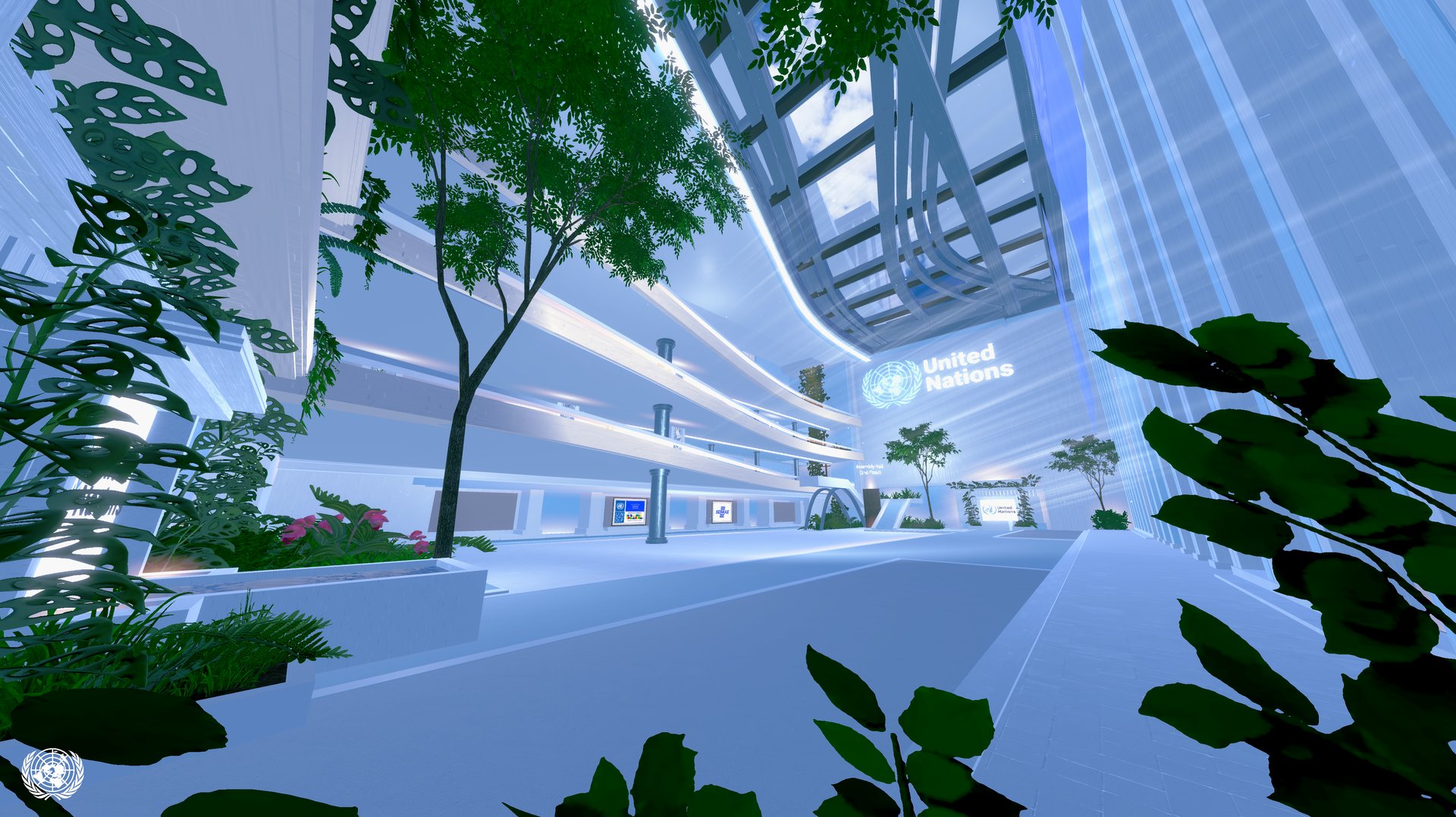
The first floor kept the flow of the traditional New York hall: reception, vertical transport, space for information displays. The second and third floors carried the part that made the building work — rhythmically spaced portals to eighteen external meeting rooms, each one a door out of the hall and into a negotiation. The fourth floor stayed deliberately open: overflow seating, social zones, a room that could become breakout sessions or an exhibition depending on what the fortnight demanded. Grandeur and optimization, balanced — the phrase we kept coming back to, and the finished hall is what it looks like.
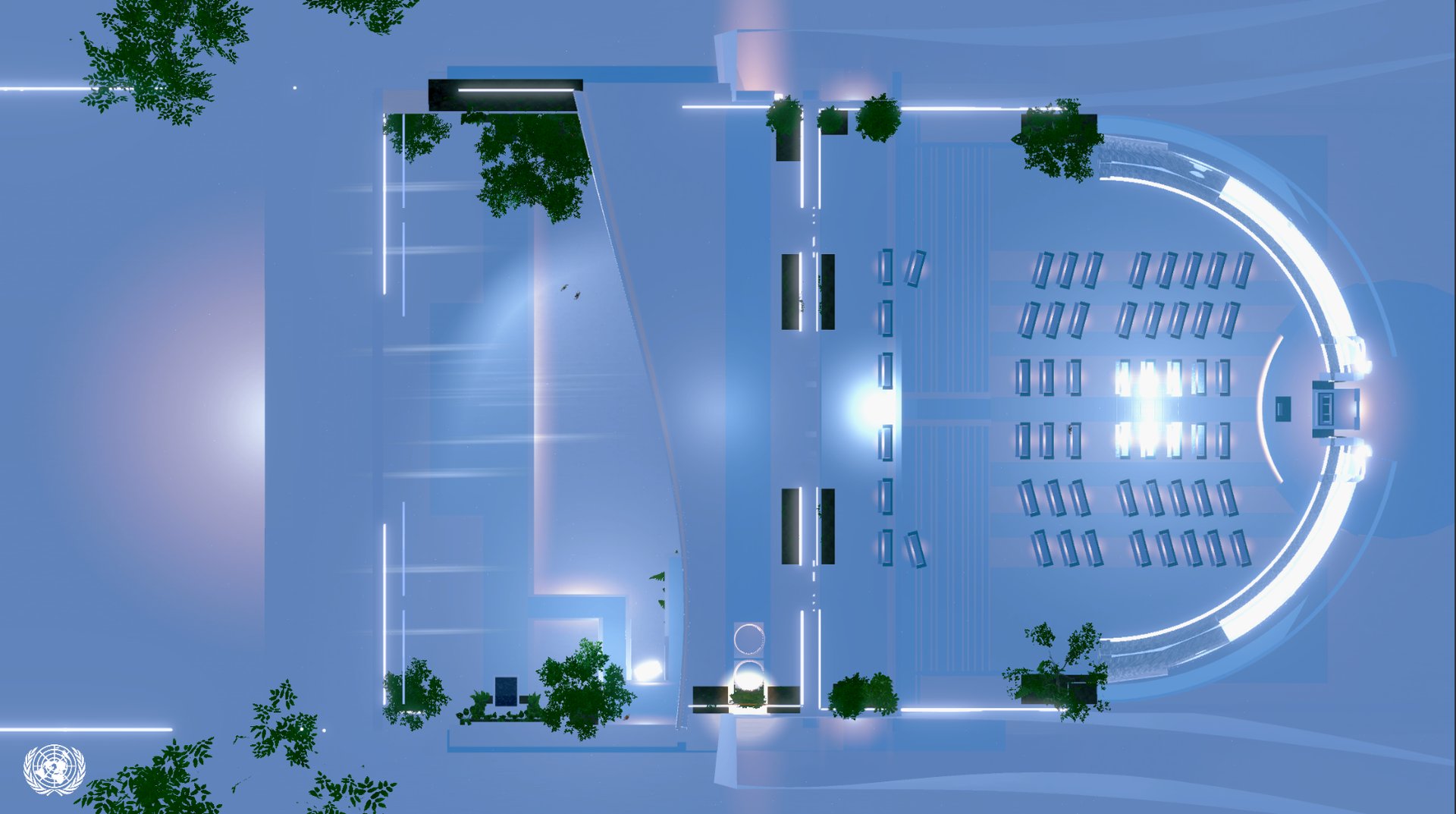
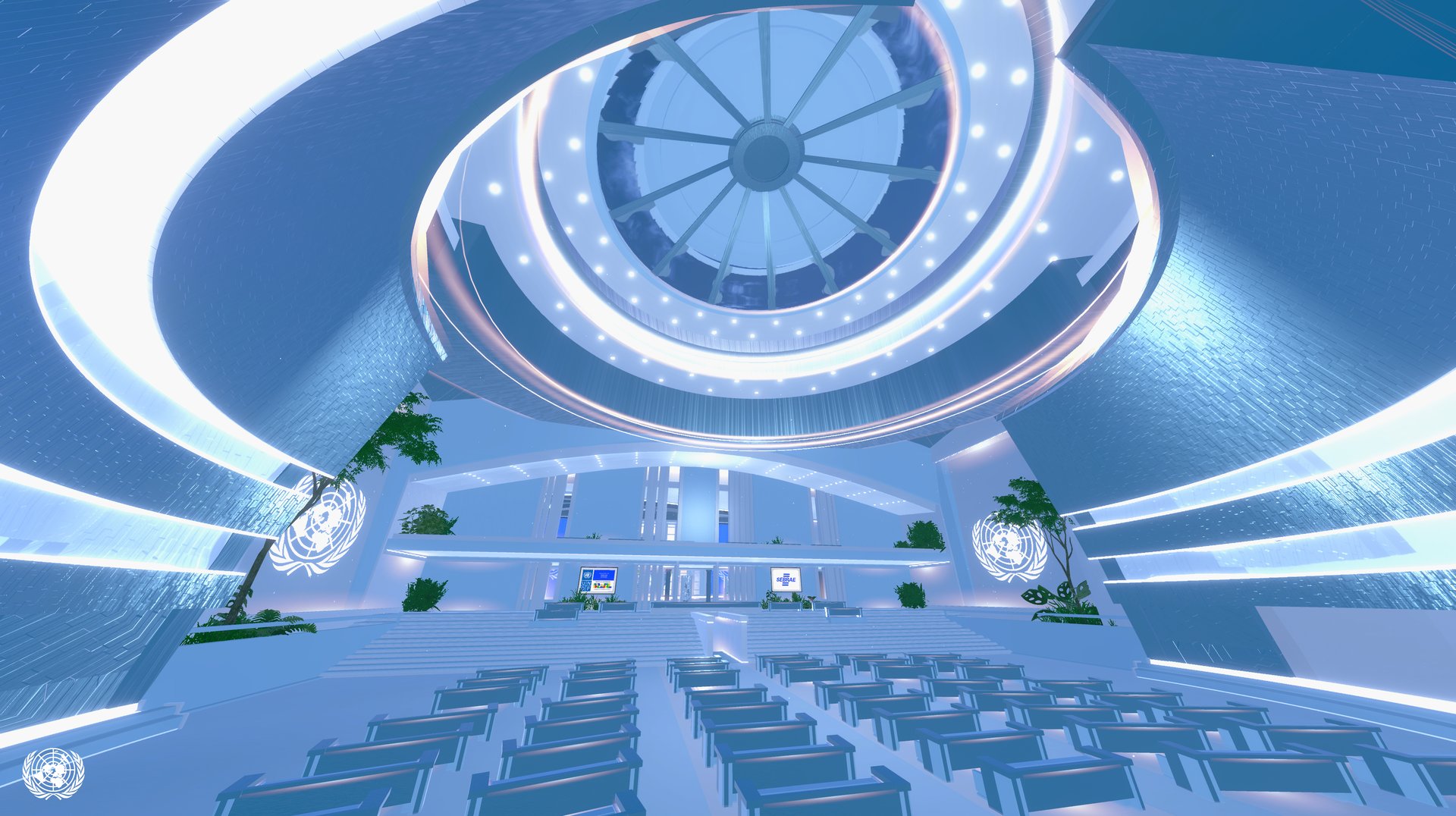
The Assembly Hall itself was the heart of it. The main room carried the real chamber's logic: flexible configuration, seating arranged so every desk had a sightline, the room legible before it was beautiful. It had to work as a room before it was allowed to be a symbol.
What the room became
By November the hall was live as the center of Maloca — the COP30 Presidency's virtual platform, built on Spatial — and the numbers the UN ended up publishing were the ones we had designed the pipes for: up to 7,200 events across 20 virtual environments over the fifteen days of the conference, an AI assistant named Macaozinho trained only on official UN documents, AI translation in seven languages so a delegate could argue in the language they dreamed in. Four thousand people came through before the doors officially opened. The General Assembly Hall — a room you normally need a delegation badge to stand inside — took everyone.
The CNN segment called it a way to bring the public into the plenary. The UN's own press release called it a new era of global climate participation. We have a smaller name for it, the one we use in the studio: it's the room responding. The same instinct that put a store inside a game put a parliament inside a website. Spaces that meet people where they are — that's the whole practice, and COP30 was the largest room it has ever been asked to hold.
What the room taught us
Build the civic loop early, the way we built the commerce loop for Walmart: the moment a public visitor can walk the same floor as a delegate, every design argument gets honest. Keep the hall legible before it's beautiful — clear sightlines and honest pathways beat marble with dead ends. And treat the client as a co-author: half the decisions that mattered came back from their answers, not our drafts.
The most recognizable meeting room on Earth now has a twin that anyone with a browser can enter. The original took decades and an ocean of diplomacy. The twin took one fortnight of the world's attention — and a studio that treats a building as a place, not a backdrop.


The platform the hall lives on got its own coverage — the UN's press office, UNDP Climate Promise, and CNN Brasil all wrote it up. None of them name us; that's fine. We built the room, and the room is the receipt.